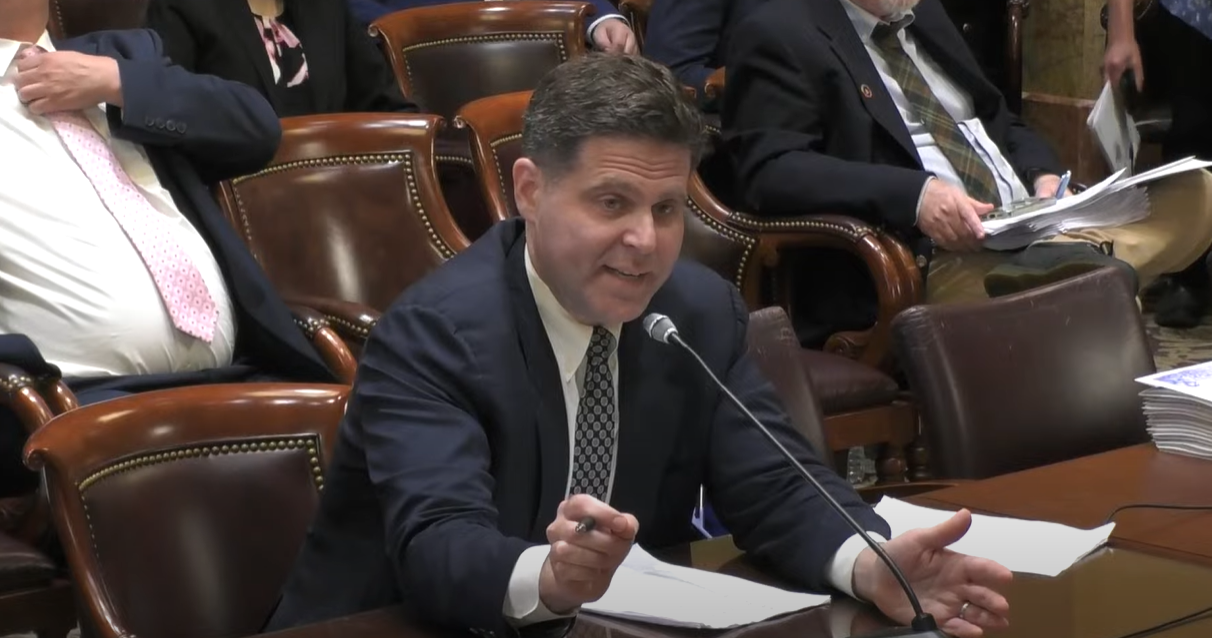
Representative Solomon speaks before the House State Government Committee Tuesday 5/13/25 about the need to repeal closed primaries in Pennsylvania.
Where It Started
Primary elections came about during the Progressive Era to put power in the hands of voters instead of party bosses. Pennsylvania’s closed primary system dates back to the 1937 Election Code, which was designed to stop “mushroom parties”—small, short-lived political groups that cluttered ballots and left voters confused.
Today, primaries play a huge role in shaping the state legislature. A Spotlight PA report in 2024 found that only 14% of the 228 seats on the ballot were actually competitive—29 in the House and just three in the Senate. That’s especially important now, since Democrats currently hold only a one-seat majority in the state House.
Pennsylvania’s election laws haven’t always kept up with the times. Act 77 in 2019 allowed mail-in voting, but the code still requires polling places to provide “lanterns” or a substitute. Decades of lawsuits have also made the law harder to interpret.
The Push for Change
Lawmakers have tried several times to repeal closed primaries. In 2019, the Senate passed Senator Joe Scarnati’s repeal bill with bipartisan support, but it stalled in the House. Senator Dan Laughlin has since taken the lead, introducing bills each session—including Senate Bill 400 in 2025, which is waiting for a committee vote.
In the House, Representatives Jared Solomon and Marla Brown both introduced repeal bills in the 2023-2024 session. For the first time ever, one of those bills cleared the State Government Committee. The following year, House Bill 976 even passed on the floor with a 112-90 vote, but it never made it to a final decision because of disputes over amendments. In the current session, Representative Solomon’s House Bill 280 moved out of committee in May 2025.
Even with strong support, repealing closed primaries hasn’t been easy. Election reform bills often attract amendments on hot-button issues like voter ID, pre-canvassing, and mail-in ballots. Leaders on both sides worry that repeal bills could turn into “Christmas trees” loaded with unrelated measures, making it difficult to get them across the finish line.